From Medical Disqualification to Combine Sensation: Jamel Dean's Unstoppable Speed
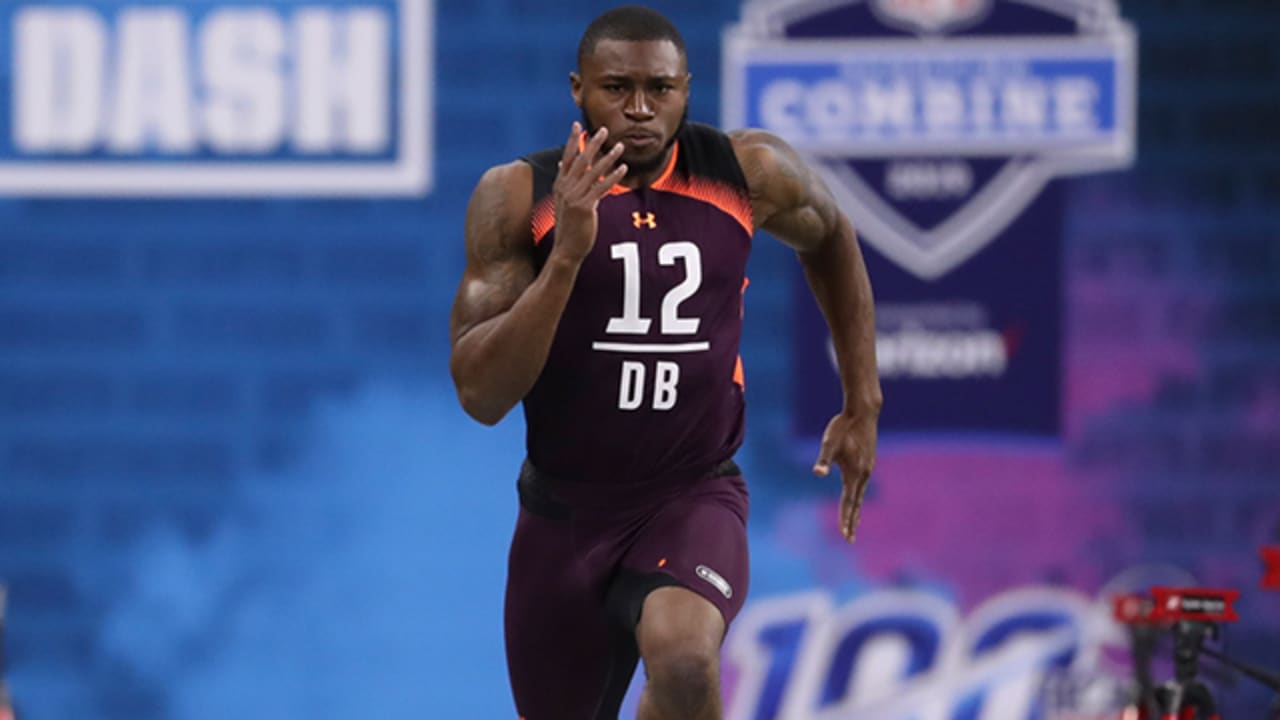
In the high-stakes world of NFL scouting, few metrics capture attention quite like the 40-yard dash. It's a raw, unadulterated measure of speed, often seen as a direct indicator of an athlete's potential to thrive in the professional ranks. For cornerback Jamel Dean, his performance at the 2019 NFL Scouting Combine was nothing short of legendary, delivering a blazing Jamel Dean 40 Time of 4.30 seconds. This wasn't just a fast time; it was a defiant declaration, especially considering the arduous journey he endured to reach that moment.
Dean's 4.30-second dash was initially the second-fastest recorded at the 2019 Combine, only narrowly edged out by Ole Miss safety Zedrick Woods' 4.29. However, for a defensive back of his stature – 6-foot-1 and 206 pounds – it was an absolutely phenomenal showing. This elite speed immediately vaulted him into the conversation as one of the draft's most intriguing prospects, demonstrating a rare combination of size and explosiveness that NFL teams covet. The sheer power and acceleration displayed in that brief sprint spoke volumes, hinting at a player capable of shadowing the fastest receivers and closing gaps in coverage with astonishing quickness. This incredible feat wasn't just a personal best; it reshaped perceptions and significantly altered his professional trajectory, a testament to how crucial combine performances can be. To understand the full weight of this achievement, one must appreciate the incredible hurdles Dean had already overcome.
Navigating the Injury Minefield: Dean's Road to Recovery
The story of Jamel Dean's speed is inextricably linked with his battle against injury, a narrative that makes his combine performance all the more astonishing. His collegiate career almost never began due to a series of devastating knee injuries sustained during his high school years. In 2013, he suffered a torn ACL, a severe blow for any aspiring athlete. This was followed by a torn meniscus in 2014, both affecting the same knee and occurring during pivotal moments in his high school career, including his senior season's final game. These setbacks raised serious concerns about his long-term durability and ability to withstand the rigors of high-level football.
Upon signing with Ohio State as an early enrollee, Dean faced a crushing blow: the school's medical staff deemed his knee too unstable for competition and medically disqualified him. This wasn't merely a temporary setback; it was a pronouncement that could have ended his football dreams before they truly began. His high school coach openly speculated that Ohio State's decision might have been influenced by roster management, suggesting the school was over its scholarship limit and a medical hardship would allow Dean to remain on scholarship without counting against the football program's total. Regardless of the underlying motivations, the outcome was clear: Jamel Dean would not play for the Buckeyes.
This period of medical uncertainty is a critical chapter in Dean's journey. Being medically disqualified not only impacts a player's immediate future but can also cast a long shadow over their perceived reliability. For Dean, however, this adversity forged an incredible resilience. Instead of giving up, he sought a new path, transferring to Auburn in May 2015. This move, while offering a fresh start, came with its own set of challenges, including having to sit out the entire 2015 season due to NCAA transfer rules. Just when he was poised to finally hit the field and compete for a starting spot in 2016, fate dealt another cruel hand: he suffered yet another knee injury, this time to his *other* knee, requiring surgery and sidelining him for the entire season. The mental fortitude required to continually rebound from such repeated blows speaks volumes about his character and unwavering determination.
Auburn Redemption and NFL Draft Ascent
Despite the cascade of setbacks, Jamel Dean's spirit remained unbroken. His perseverance finally paid dividends when he returned to action in 2017, emerging as a crucial starter for the Auburn Tigers. That season, he played in all 14 games, demonstrating his growing impact with 43 tackles, 2.5 tackles for loss, and a significant number of pass breakups. He followed this up with an even more impressive 2018 campaign, registering 30 tackles, two tackles for loss, two interceptions, and nine pass breakups. These two seasons showcased not only his physical recovery but also his evolution into a formidable defensive back, capable of making game-changing plays.
With one season of eligibility still remaining, Dean made the pivotal decision to declare for the 2019 NFL Draft. This choice was a testament to his confidence in his abilities and perhaps a premonition of the electrifying performance he was about to deliver at the Combine. His on-field production at Auburn, combined with his undeniable athletic gifts, signaled to NFL scouts that he was a talent worth investing in. The Jamel Dean 40 Time, therefore, wasn't just a surprise; it was the exclamation point on a comeback story, confirming his elite athletic profile to a league that values speed above almost all else. His combine performance, especially that record-setting dash, dramatically boosted his draft stock, turning heads and forcing teams to reconsider his potential. To delve deeper into how this pivotal moment shaped his professional outlook, read How Jamel Dean's Blazing 40-Yard Dash Impacted His NFL Draft Stock.
The Enduring Impact of Elite Speed in the NFL
The transition from collegiate standout to NFL professional is a challenging one, but for Jamel Dean, his combine speed provided an invaluable foundation. Even before he was officially drafted by the Tampa Bay Buccaneers in the third round of the 2019 Draft, his 4.30-second 40-yard dash had made him a recognizable name. In the NFL, particularly for a cornerback, elite speed is not just a luxury; it's a necessity. It allows defensive backs to recover from missteps, keep pace with the league's fastest wide receivers, and break on throws with explosive force.
Dean quickly established himself as a fast, physical defensive back in the NFL. While sustaining a 4.30 top speed constantly might be a tall order, his baseline speed and athleticism have remained core components of his game. Throughout his career with the Buccaneers and now with the Pittsburgh Steelers, Dean has consistently demonstrated the ability to run and hit, a crucial combination for a modern NFL cornerback. His impressive statistics, such as allowing a passer rating of just 63.1 and opponents completing less than half of their passes in his direction during a recent season (which also saw a career-high three interceptions), underscore his effectiveness.
In divisions like the AFC North, where the Pittsburgh Steelers frequently face formidable receiving duos such as the Bengals' Tee Higgins and Ja’Marr Chase, having multiple capable coverage men is absolutely critical. Dean's presence, along with his size and physicality, provides a much-needed boost to any secondary. His speed isn't just about covering deep routes; it enables him to close quickly on underneath throws, defend against screen passes, and contribute significantly in run support. The ability to trust a cornerback to handle one-on-one matchups on the outside frees up other defenders and allows for more aggressive defensive schemes. Analyzing the specifics of his combine performance and how it translated to his professional journey offers further insights. Explore more at Analyzing Jamel Dean's 2019 Combine 40 Time and Career Trajectory.
Beyond the Blazing Time: A Legacy of Resilience
Jamel Dean's journey is a powerful testament to human resilience and the indomitable spirit of an athlete determined to overcome adversity. His 4.30-second Jamel Dean 40 Time at the 2019 NFL Combine wasn't just a highlight-reel moment; it was the culmination of years of relentless effort, rehabilitation, and unwavering self-belief. From being medically disqualified at Ohio State due to multiple knee injuries, enduring another setback at Auburn, to finally blossoming into an NFL-caliber talent, Dean's story is a blueprint for aspiring athletes facing seemingly insurmountable challenges.
His success reminds us that while raw physical talent like blazing speed is crucial, the mental toughness to push through pain, doubt, and disappointment is equally, if not more, important. Dean didn't let the pronouncements of medical staff or the sting of repeated injuries define his future. Instead, he channeled those experiences into motivation, proving that with enough grit and determination, even the most daunting obstacles can be transformed into stepping stones toward greatness. His career continues to be a living example of how a singular focus on recovery and performance can lead to triumph, solidifying his legacy not just as a fast cornerback, but as an inspiration.
In conclusion, Jamel Dean's 4.30 40-yard dash at the 2019 NFL Combine was far more than just a remarkable display of speed. It was the emphatic vindication of a player who had faced multiple knee injuries, a medical disqualification, and continuous setbacks, yet refused to give up on his NFL dream. His journey from being deemed unfit to play to becoming one of the league's premier fast and physical cornerbacks stands as a powerful narrative of perseverance. The incredible Jamel Dean 40 Time ultimately not only etched his name in combine history but also laid the foundation for a successful and impactful career in the National Football League, proving that true speed often comes from the heart as much as from the legs.